Six agonizing seconds.
Sarah sat there, watching her colleagues nod enthusiastically at a strategy she knew was doomed.
After weeks of customer interviews telling a completely different story, she wanted to speak up. But the echo of being labeled "too negative" at her last job made her hesitate.
Then Kelly, her manager, noticed.
"Sarah, you've been talking to our customers. What are they telling us that we need to hear?"
That simple invitation to speak changed everything.
In the end, we will remember not the words of our enemies, but the silence of our friends.
Two months later, their revised strategy broke every adoption record they had.
You know what gets me about this whole psychological safety thing?
We've got it all wrong when we say it's about being brave. Truth is, it's about trust. Plain and simple.


Sponsored
MGMT Playbook
Practical management insights straight to your inbox every Wednesday.
Psychological safety is when the risk of speaking up feels lower
than the risk of staying silent.
When someone stays quiet in a meeting, it's rarely because they lack courage. It's because they've learned the hard way that speaking up comes with a price tag.
I've spent years watching teams do this dance - everyone nodding along, while the real insights stay buried.
The irony?
Those peaceful-looking teams, where everyone seems to agree? That's often where the biggest fires are smoldering.
And the most expensive mistakes?
They happen when someone swallows hard and keeps those customer insights to themselves, thinking it's safer that way.
These days, speaking up can feel like walking through quicksand.
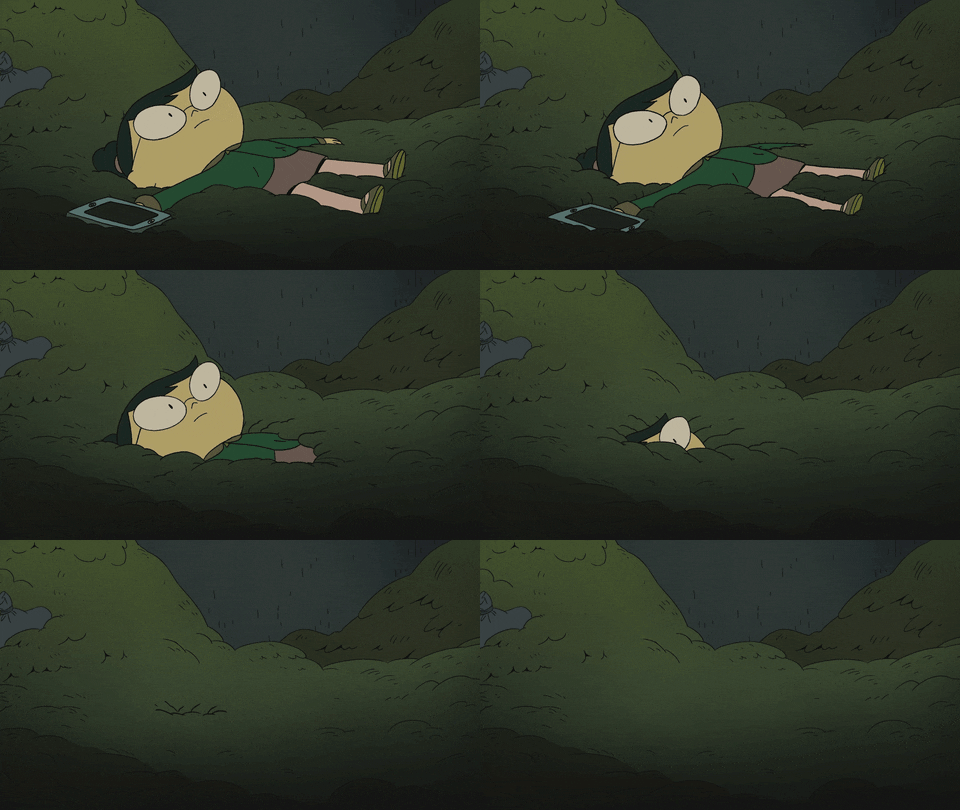
Gif by cartoonhangover on Giphy
We're all squinting at Zoom/MS Teams squares trying to guess if that grimace means "bad idea" or "bad wifi."
Meanwhile, brilliant people stay quiet because nobody wants to be tagged as "the negative one."
So here’s my TRUST Framework (Because Safe Teams Win Together)
T - Thank the Messenger
R - Respond with Curiosity
U - Understand the Stakes
S - Show You're Listening
T - Take Action Visibly

Let’s get it.
Gif by BigBrotherAU on Giphy
T - Thank the Messenger
Because every voice risks something
Think of this like catching a trust fall:
Acknowledge the courage instantly: "Thank you for bringing this to us"
Name the specific value: "Your customer insights are crucial here"
Show genuine appreciation: "This is exactly what we need to make better decisions"
What kills trust: "Why didn't you mention this earlier?"
What builds trust: "I'm glad you felt you could share this with us today."
R - Respond with Curiosity
Because questions create possibilities
Think of this like being a detective, not a judge:
Ask for specifics: "What did customers say about this feature?"
Explore patterns: "Have you seen this concern come up before?"
Invite deeper insights: "What else did you notice?"
What kills trust: "That's not what other customers are saying."
What builds trust: "Tell me more about what you're hearing from users."
U - Understand the Stakes
Because everyone has hidden worries
Think of this like being an emotion translator:
Acknowledge risks: "I know bringing up concerns can feel risky"
Name potential fears: "You might worry this could delay the launch"
Address concerns directly: "Let's talk about how to handle timeline pressure"
What kills trust: "You're just being negative."
What builds trust: "Your concerns about user adoption are important."
S - Show You're Listening
Because people read silence differently
Think of this like being a mirror:
Reflect key points: "So what I'm hearing about the user feedback..."
Note body language: "I see this really matters to you"
Make eye contact: Put away devices, face speakers fully
What kills trust: Checking Slack while someone shares concerns
What builds trust: "Let me write this down - it's too important to miss."
T - Take Action Visibly
Because trust needs evidence
Think of this like leaving breadcrumbs:
Share next steps: "Here's how we'll incorporate this feedback"
Follow up consistently: "Following up on your concern from Tuesday..."
Close feedback loops: "Your input changed our approach - here's how"
What kills trust: "We'll keep that in mind."
What builds trust: "I'm adding this to our next sprint planning agenda."
Trust isn't built in grand gestures - it's built in small moments of being heard.

Gif by MorbiusMovie on Giphy
Every time someone speaks up, they're not just sharing information - they're sharing their reputation.
Handle it like the gift it is.

Build Smarter, Faster: AI Voice Agents for Every Industry
Dream of a calling assistant that works tirelessly, taking calls 24/7 and managing tasks like real-time booking and lead qualification? With Synthflow’s collection of AI Agent templates, tailored to industries such as real estate and healthcare, you can launch your assistant fast. Plus, you can customize and publish your own templates, opening the door to earning commissions while helping others get started!

Let's see this in action:
Imagine you're leading a team where customer insights get lost in polite nods. It's Monday's product review. Instead of rushing through updates, you try something different:
Thank the Messenger: "Before we dive in, I want to acknowledge Alex for flagging that user friction point last week. That saved us from a major usability issue."
Respond with Curiosity: When someone hints at problems: "Maya, you've been quiet - what are your power users telling you about this?"
Understand the Stakes: In your 1:1s: "What makes it hard to share difficult user feedback? What could make it easier?"
Show You're Listening: Close your laptop: "This user insight deserves our full attention. Let me grab my notebook."
Take Action Visibly: End meetings with: "Based on today's feedback, here are three changes we're making to the roadmap..."
By month's end, your team's sharing user insights freely, challenges are caught early, and your product metrics are actually reflecting customer needs.

POLL
What keeps you from speaking up?

LEVEL UP
Your 7-day Safety-Building Challenge:
Day 1: Notice who hasn't shared user feedback lately
Day 2: Thank someone for raising a product concern
Day 3: Ask "What are users telling you that we should know?"
Day 4: Share a customer insight that challenges current plans
Day 5: Follow up on someone's previously dismissed feedback
Day 6: Create space for dissenting views in meetings
Day 7: Celebrate someone who raised early warning signs
CURATED ROUNDUP
Essential Links
Book: "The Fearless Organization" by Amy Edmondson
Podcast: "Speaking of Psychology" - Episode on Why Psychological Safety Matters in a Changing Workplace" - APA
Article: "The Right Way to Respond to Negative Feedback" - HBR
Video: "The Power of Empathy: A Tool for Professional Success" - TEDx
Ready to sharpen your soft skills even more? Tap into Blinkist for quick, powerful insights from top non-fiction books and podcasts.

Every silenced concern potentially hides your next breakthrough.
But here's the flip side:
Every time someone feels safe enough to speak up, you gain the insight that could transform your product, your team, and your results.
Thanks for reading. Be easy!
Girvin
P.S. Hit reply and tell me about a time when someone made it safe for you to share a hard truth about your product or project. What did they say or do that made the difference?
P.S.S. If you ask people what soft skills are and which is most important, you may get different answers. Here’s my take.
ENTREPRENEURS:
Tired of Offers That Don’t Sell?
If your offers aren’t hitting the mark, it’s time to change that. Join Dr. Myron Golden’s Make More Offers Challenge to master the art of crafting high-impact, high-converting offers. In just 5 days, gain proven frameworks and actionable insights to enhance your influence and boost results—ideal for those wanting to excel in today’s fast-paced, AI-driven market.
There’s a reason 400,000 professionals read this daily.
Join The AI Report, trusted by 400,000+ professionals at Google, Microsoft, and OpenAI. Get daily insights, tools, and strategies to master practical AI skills that drive results.
What did you think of today's newsletter?


